

Welcome to our informational blog.
Topics covered include literary theory and practice, academic writing techniques, philosophy of education, and explanations of our methods for strengthening creative intelligence.

Writing the Chorus: Lessons from Song
Writing coaches often see repetition as one of the hardest techniques for new writers to use effectively. Left unchecked, repetition can flatten prose, creating monotony. Like a poorly written chorus, it can feel predictable and overbearing. The art lies in making repetition evolve—each recurrence must gain something from its placement.

From Fractals to Free Verse: Mathematical Blueprints for Poets
Numbers, patterns, and proportions have been used to shape the rhythm, length, and themes of poems in ways that both sharpen their craft and deepen their mystery. For writers who are drawn to this union of precision and beauty, the guidance of a literary coach can help them understand how to harness mathematics as a source of inspiration without letting it flatten the poem into a technical exercise.

Six Traits of Successful Authors: Cultivating Good Habits with Literary Mentorship
When we gather these attributes—persistence, discipline, openness to revision, curiosity, empathy, adaptability—we notive an interwoven set of habits and mindsets. Some may be stronger in one writer than another; each can be cultivated over time. The creative writing mentor’s role is to help the writer recognize and strengthen these capacities in ways that align with their voice and ambitions.

Why It’s Never Too Late to Write Your Book
Far from being at a disadvantage, older writers often carry strengths that younger writers must work for decades to earn. And with the support of a skilled book coach, these strengths can be honed into a finished work that feels both seasoned and urgent.

Learning from Failure: How Abandoned Drafts Teach More than Finished Works
Creative writing mentors have the benefit of distance. They can read a struggling draft and point out its strengths, even if you can only see its flaws. They can also identify which issues stem from fixable craft problems—such as structure, pacing, or character development—and which come from a deeper mismatch between you and the project itself.

Learning to Listen: Coaching Meter in Poetry
Meter is music—a rhythm that breathes tension and tone into a line of verse. It’s the beat beneath the words that tells us how to feel, even before we understand what the words are saying. But learning to hear that beat, and use it intentionally, isn’t always straightforward. That’s where author mentorship can help.

Microstructures: How Paragraph Shape Affects Narrative Pace
In publishing and workshop settings, writers often focus on what they’re saying. But how those words are spatially and rhythmically delivered can carry just as much weight. This is the territory of microstructure—a layer of craft that is subtle, yet vital. And it's also a level of prose that publishing coaches and manuscript consultants are uniquely skilled at helping writers refine.

Disruption and Design: What Fragmentation Teaches Us About Voice and Form
In workshop and manuscript consultation settings, literary coaches often remind poets that readers—especially those raised on the internet’s rhythm—aren’t confused by fragmentation itself. What they need is a thread of intention. Whether it’s emotional, musical, thematic, or imagistic, there must be something that gives the fragments a center of gravity.

Out of the Shadows: Queer Identity and the New Southern Literary Imagination
This new wave of writers often faces a dual challenge: telling stories that are both highly personal and politically charged, while also breaking form with traditional Southern narrative arcs. Their work might blend memoir and fiction, defy genre, or speak in voices previously erased. Book coaching services can offer guidance in shaping unconventional manuscripts while protecting the writer’s emotional core.

What Makes a Narrative Voice Memorable—And How a Literary Coach Can Help You Develop Yours
In this post, we’ll explore what makes a narrative voice memorable—and how a manuscript assessment with a literary coach can serve as one of the most effective tools for cultivating and clarifying that voice in your own work.

A Room of One's Own: Designing Your Creative Space with a Mentor
The writer’s room is both a literal and a psychological space, an internal chamber where our most unformed thoughts knock on the door, hoping to be let in. Whether you write in a sunlit attic, a cluttered kitchen, or a corner of the public library, your space reflects and shapes your relationship to language, to risk, and to your own creative identity. What few talk about is how that space is often co-designed—quietly, tenderly, wisely—through the influence of literary mentors.

What Changes, What Remains: The Lifelong Evolution of the Writer's Voice
These stylistic evolutions rarely happen in isolation. Rather, they emerge from a constellation of influences: lived experience, intellectual development, cultural shifts, and perhaps most significantly, mentorship—those sustained relationships that offer critical engagement, guidance, and encouragement through years of artistic searching.

Writing into the Fog: Embracing Poetic Ambiguity through Negative Capability
This sensibility resists the common pedagogical instinct to reward narrative closure. Instead, it values the capacity to hold two or more conflicting truths in a single frame of mind and render that tension on the page. For those developing a poetic voice, this can be disorienting. That is why writing coaching and mentorship can be so transformative: a good poetry coach doesn’t force closure but teaches the writer how to tolerate—and even honor—the ambiguity.

From Kafka to le Carré: The Literary Consultant’s Guide to Bureaucratic Fiction
In today’s publishing landscape—where writers experiment with dossiers, emails, and redacted files—the literature of bureaucracy remains enticingly contemporary. Yet its subtle power also presents unique craft pitfalls. A manuscript evaluation with a literary consultant can illuminate those hidden traps, ensuring that bureaucracy serves the story rather than smothering it.

The Invisible Wall: Overcoming Writer’s Block with the Help of a Creative Writing Mentor
The key, then, is not to deny or fear writer’s block, but to understand it and equip oneself with the right tools to move through it. Among the most powerful tools a writer can access is the guidance of a creative writing mentor: someone who not only sees the potential in a struggling writer but helps illuminate the path forward when it feels lost in fog.

Writing in the Aftermath: Literature of War, Exile, and the Power of Literary Mentorship
Today, as conflicts rage in Gaza, Ukraine, Sudan, Myanmar, and countless less-covered regions, the literature of war and exile is not only relevant—it is essential. Yet these narratives often resist the marketable polish expected by Western publishers. They are nonlinear. They are raw. They carry within them the weight of real loss. For this reason, the role of a mentor—particularly one attuned to the ethical responsibilities of editing trauma—is indispensable.

Hidden Lines and Vertical Voices: Exploring Acrostic and Mesostic Poetry with a Coach
These forms invite poets to rethink not only the content of their verse but the mechanics of its arrangement. And for writers looking to push the boundaries of poetic form, hiring a writing coach can offer the support and insight needed to fully explore their potential.

Unfilmable by Design: Embracing the Interior Freedom of the Novel
Fiction, in all its interiority and linguistic fluidity, can linger where film must cut. It can meander where cinema must be economical. It can articulate not just what a character sees, but how their memory distorts it, how their consciousness folds around it, how their desire colors it. This is not a failing of film. Rather, it reveals something profound about what fiction, at its most ambitious and introspective, makes possible—and why writers who feel pulled toward this literary freedom often benefit from the guidance of a skilled book-writing consultant.

When Words Fall Short: Coaching Writers Through the Philosophy of Language
The philosophy of language has grappled with this tension for centuries, and any serious coach or mentor in the writing world must grapple with it as well, if only implicitly. Helping a writer refine their craft is, at heart, helping them narrow that gap, or at the very least, learn how to navigate it with purpose and confidence.
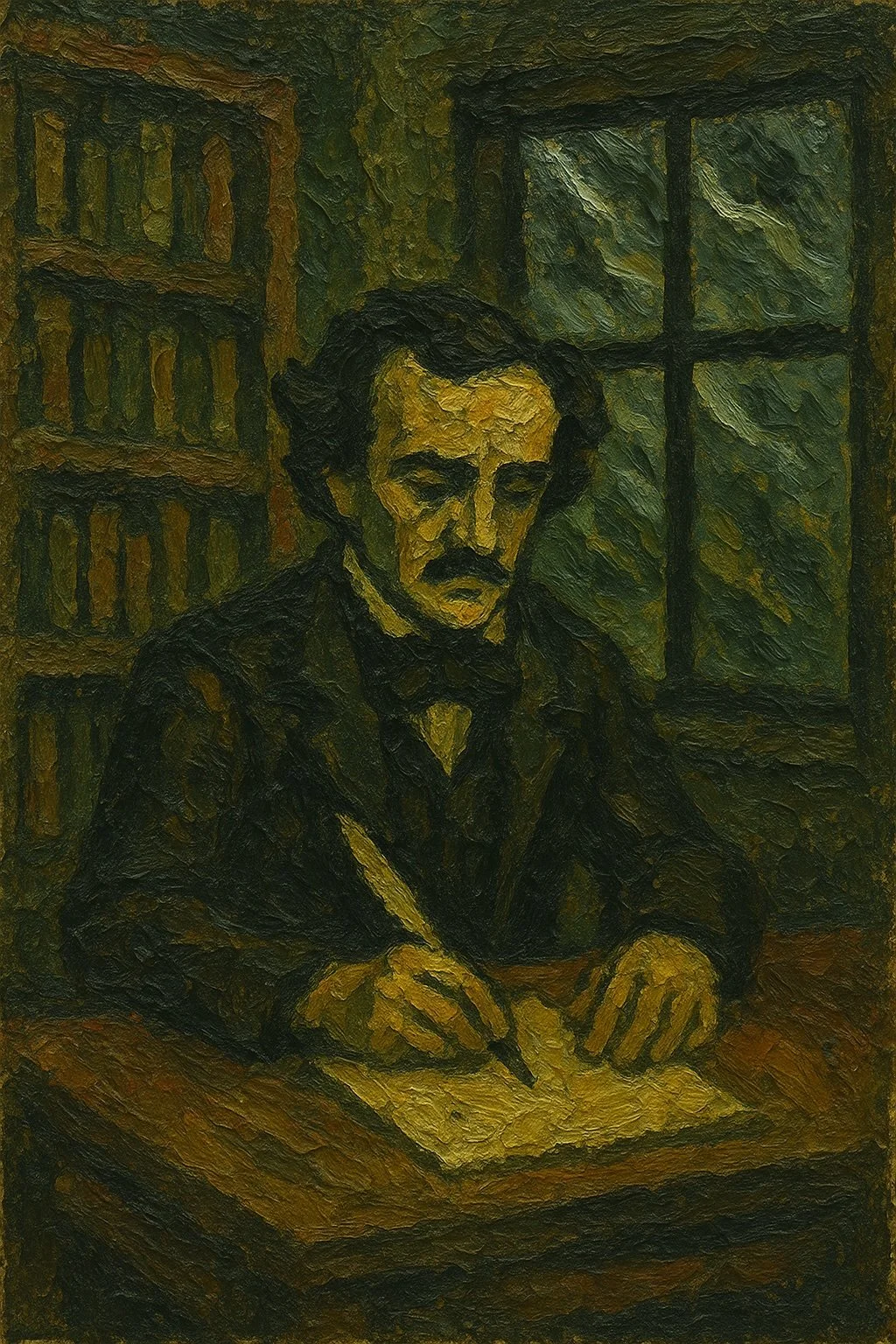
The Unity of Effect Reimagined: Short Story Coaching in the Spirit of Poe
This theory, known as the Unity of Effect, would go on to shape generations of writers and critics, and it remains one of the most enduring craft principles in literary history. But what does this idea mean for the contemporary short story writer? And more importantly, how can a creative writing coach or mentor help a developing writer apply such a meticulous, even architectural, approach to their storytelling?